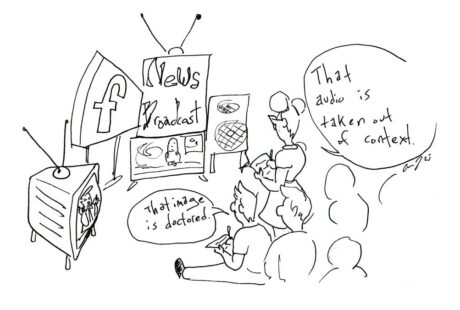
Chapter 8 explains mass communication and it demonstrates the concept of “Media Literacy”, which is the ability to access, analyze, evaluate, and create media messages. In the cartoon, several people are watching different forms of media, including television, social media, and news broadcasts. However instead of accepting everything they see, they question whether an image has been doctored or whether audio has been taken out of context. This reflects the importance of media literacy because people should think critically about the information they receive before believing or sharing it. The chapter explains that mass media can influence how people understand current events, so it is important to evaluate the credibility of information and recognize that media messages can sometimes be misleading or incomplete.
Growing up in this era I use social media and read online news every day. I come across posts or videos that make extremely wild claims everyday. When I was younger I definitely believed most “news” I saw online but as i’ve grown up I have learned not to believe everything immediately. If it’s information I genuinely want to know about , I try to check multiple sources to see if the information is accurate before sharing it with others. There have been many times when I discovered that a headline, image, or video was misleading because it was edited or taken out of context. Media literacy is an important communication skill because it helps people become informed consumers of media and prevents the spread of misinformation.
Email us at [email protected] so we can respond to your questions and requests. Please email from your CUNY email address if possible. Or visit our help site for more information:
Submit a Comment