


A BLOG BY NAIMA JEAN-LOUIS
Laugh Now, Panic Later
On 01, Jul 2026 | No Comments | In Weekly Chapter Posts | By Naima Jean-louis
Key Term: Rhetorical Methodologies
Subheading: Communication Research
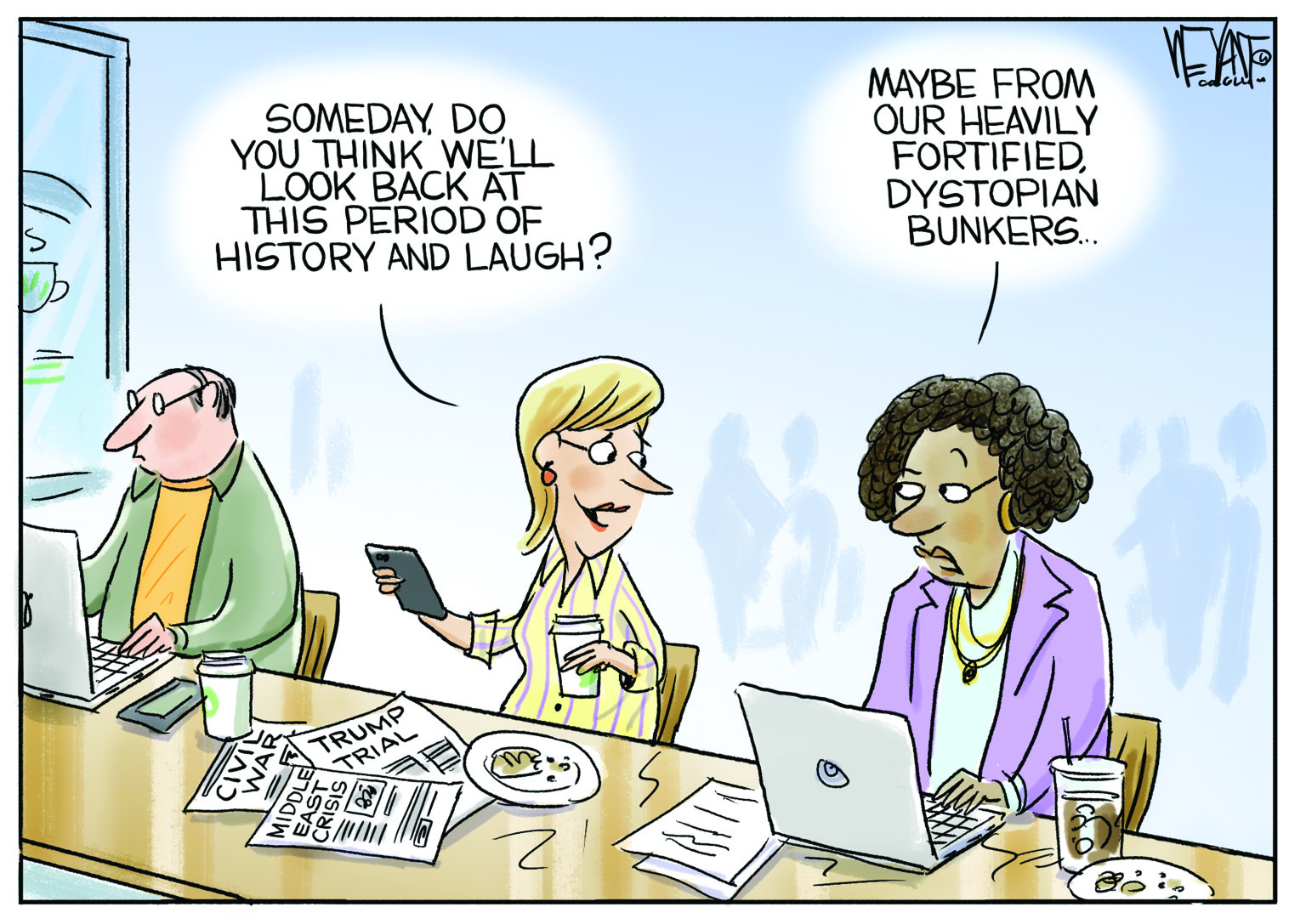
This cartoon relates to Chapter 6 because it demonstrates Rhetorical Methodologies, which are research methods used to analyze how messages persuade audiences through language, humor, symbols, and other forms of communication. In this cartoon, one coworker wonders if people in the future will look back at this period in history and laugh, while the other sarcastically replies, “Maybe from our fully fortified dystopian bunkers.” The humor and exaggeration are examples of satire, subtly encouraging others to reflect on current events and the uncertainty many people feel about the future. Rather than simply presenting facts about the world and where it headed , the cartoon communicates its message through satire. The chapter explains that rhetorical methodologies examine how communication influences the way people think, interpret issues, and respond to messages.
I often see political cartoons, memes, and social media posts that use humor to discuss serious issues. Even though they are meant to be funny, you can see in the comments or reactions from people that they often encourage people to think about what is happening in the world from a different perspective. I have noticed through different audiences that satire can make complex topics easier to understand while also encouraging discussion about important issues. This chapter reminded me that communication is not only about sharing information but it can also about persuading audiences and shaping how people view the world.
When the Costs Outweigh the Benefits
On 01, Jul 2026 | No Comments | In Weekly Chapter Posts | By Naima Jean-louis

Key Term: Social Exchange Theory
Subheading: Communication Theory
I chose this cartoon for Chapter 5 because it demonstrates the concept of Social Exchange Theory in a relatable way, chapter 5 explains that people evaluate relationships by comparing the rewards they receive with the costs they experience. In the cartoon, a dog has destroyed the living room, and its owner jokes that the dog’s “cost to benefit ratio is way out of whack.” While the cartoon is comedic, it reflects the idea that people often think about whether the positives of a relationship outweigh the negatives. Individuals are more likely to continue relationships when they believe the rewards, such as companionship, trust, or support, are greater than the costs, such as stress, conflict, or frustration.
In life I feel that all healthy relationships require balance, whether it is with friends, family, coworkers or even pets, relationships work best when both people contribute and support one another. I think even now there have been times when I felt like I was putting in more effort than the other person, after awhile it makes you start to think about whether the relationship was balanced and beneficial in a way to both sides. At the same time, there are relationships where the support, trust, and shared experiences make any challenges worthwhile.
Questioning What We See
On 30, Jun 2026 | No Comments | In Weekly Chapter Posts | By Naima Jean-louis
What’s So Controversial?
On 24, Jun 2026 | No Comments | In Weekly Chapter Posts | By Naima Jean-louis

A Lack of Direction
On 22, Jun 2026 | No Comments | In Weekly Chapter Posts | By Naima Jean-louis
Editorial Cartoon Analysis
Key Term: Organizational Communication
Subheading: Communication in the Workplace
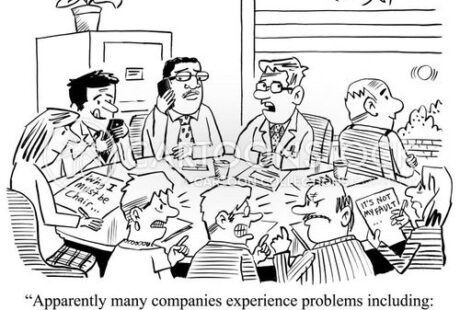
This cartoon relates to Chapter 11 because it demonstrates the concept of Organizational Communication, which is the process of sending and receiving messages within an organization. In the cartoon, a group of employees are sitting in a meeting, but everyone is distracted and focused on their own concerns. Some people are on their phones, others are talking over each other or just completely disengaged from the conversation, and no one seems to be working together. There are different themes shown here such as a lack of direction, poor accountability, lack of respect among members, personal agendas, and poor communication. This shows how organizations struggle when employees are not effectively communicating with one another. Further explaining that communication is essential for helping organizations achieve goals, solve problems, and maintain productive relationships among employees.
I think I’ve experienced situations in at work during our monthly meetings where the communication was super unclear and disorganized. For example, during the meetings, employees will be on their phones, talking to each other or just not being engaged in the conversation being had. Some may not communicate their responsibilities, causing other people to pick up the extra work. Poor communication often makes employees feel disconnected and unsure about what is expected of them. This cartoon reminded me that effective organizational communication is important because it helps everyone work toward the same goals and creates a more productive environment.
Pulling in the Same Direction
On 22, Jun 2026 | No Comments | In Weekly Chapter Posts | By Naima Jean-louis
Editorial Cartoon Analysis
Key Term: Interdependence
Subheading: Group Communication
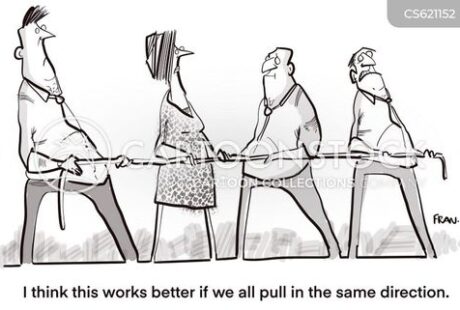
This cartoon relates to Chapter 10 because it demonstrates the concept of interdependence, meaning that group members depend on one another to achieve a common goal. In the cartoon, four people are pulling on the same rope, but they are all facing different directions. One of the people points out that the task would work better if everyone pulled in the same direction. This shows that even though everyone is participating, the group is not being effective because they are not working together. The chapter explains in depth that successful groups must rely on cooperation and coordination in different ways. When group members fail to communicate or share the same goal, the group’s efforts can become ineffective and lead to disagreements and frustration.
I have worked on many group projects , whether that’s in school, work or even casually hanging out with my friends there are always instances where everyone has different ideas about how the project should be completed. Sometimes group members want to approach the assignment in different ways, which makes it harder to finish the project efficiently. However, I think once you communicate and agree on a plan, the project becomes much easier to complete. Simply being part of a group is not enough. I think for a group to be successful, everyone must work together and move toward the same objective. If there no effective communication or any communication at all groups can’t stay organized, avoid confusion, and achieve their goals.
Lost in Translation Across Cultures
On 10, Jun 2026 | No Comments | In Weekly Chapter Posts | By Naima Jean-louis
Editorial Cartoon Analysis
Key Term: Language and Culture
Subheading: Language and Intercultural Communication
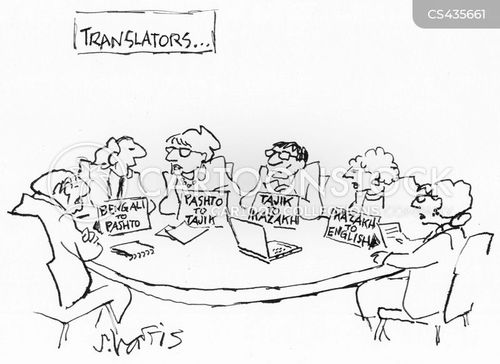
This cartoon relates to Chapter 12 because it demonstrates the connection between language and culture in intercultural communication. The image shows a group of translators passing a message through several different languages before it reaches the final person. This illustrates how communication can become more complicated when people do not share the same language. As messages are translated, meanings, expressions, or cultural references can be misunderstood or altered. The chapter explains that language is closely connected to culture and that effective intercultural communication requires understanding, patience, and awareness of these differences.
This cartoon relates to my life because I communicate with people who have different cultural and language backgrounds at school and in everyday situations. For example, I’m Haitian and my family speaks creole, but sometimes they will say something and it will mean something completely else in english, which causes miscommunication and confusion so I often have to clarify what is being said and what they really mean, However although this happens a lot, being patient, listening carefully, and asking questions can help prevent misunderstandings and still improve communication through different languages.
The Balance of Self-Disclosure
On 10, Jun 2026 | No Comments | In Weekly Chapter Posts | By Naima Jean-louis
Editorial Cartoon Analysis
Key Term: Self-Disclosure
Subheading: Developing and Maintaining Relationships
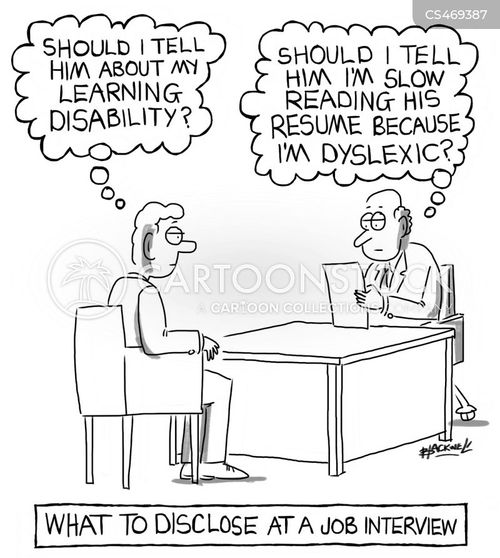
This cartoon relates to Chapter 9 because it demonstrates the concept of self-disclosure, which is the process of revealing personal information, thoughts, and experiences to others. In this cartoon, both the job applicant and interviewer are deciding whether to share personal information during an interview. The applicant is considering whether to disclose his learning disability, while the interviewer is debating whether to reveal that he has difficulty reading the resume because of dyslexia. This shows that people often make decisions about what information is appropriate to share and when it should be revealed. The chapter explains that self-disclosure requires balancing openness with privacy and depends on the situation, the relationship, and the level of trust between people. I also think showing an example of this in a work space is important because it shows that you can develop relationships everywhere through communication like this it does not have to only be between friend and family.
This cartoon relates to my life because there are situations where I must decide how much personal information to share with classmates, coworkers, or supervisors. For example, when starting a new job or working with a new group of people, I may choose to share certain challenges, experiences, or personal details only after I feel comfortable and have developed trust. This demonstrates how self-disclosure influences professional relationships and helps people build understanding and respect. There have been multiple pieces of information I waited to share with my coworkers and boss at my job until I felt comfortable and I think that has helped my experience there a lot more.
What Your Body Is Saying
On 10, Jun 2026 | No Comments | In Weekly Chapter Posts | By Naima Jean-louis
Editorial Cartoon Analysis

Key Term: Kinesics (Body Movement)
Subheading: Types of Nonverbal Communication
This cartoon relates to Chapter 3 because it demonstrates kinesics, which refers to the use of body movements, posture, gestures, and facial expressions to communicate messages. In the cartoon, the salesperson notices the customer’s body language and points out how it shows they have lost interest. In the cartoon the customer does not verbally say they are bored or uninterested, but their slumped posture and lack of engagement communicate those feelings. This relates to the chapter’s idea that nonverbal communication can reveal emotions and attitudes and can also sometimes communicate more clearly than words.
This cartoon relates to my life because I often recognize body language in school, work, and everyday conversations. For example, when I’m at work explaining something about the menu to a customer or even some one that i’m training, they may say that they understand what I’m pointing out or showing them , but their facial expressions , body language (tilted head) , or distracted behavior may show that they do not fully understand what i’m talking about. Paying attention to these nonverbal signals helps me better understand how others feel and adjust my communication style so that my message can get across clearly and vice versa.
When Words Mean Different Things
On 10, Jun 2026 | No Comments | In Weekly Chapter Posts | By Naima Jean-louis
Editorial Cartoon Analysis
Key Term: Ambiguous Symbols
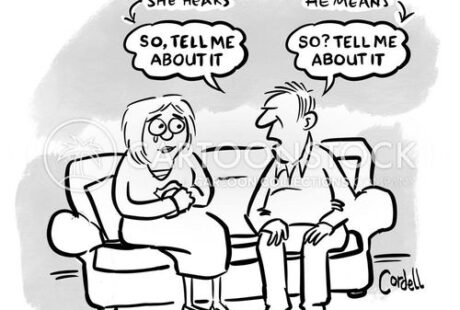
This cartoon relates to Chapter 2 because it demonstrates the concept of ambiguous symbols in verbal communication. The phrase “So, tell me about it” is interpreted differently by each person in the conversation. The woman hears the statement as an invitation to share her feelings, while the man is saying it as a sarcastic or dismissive comment. This illustrates how words can have multiple meanings depending on tone, context, and personal interpretation. The chapter explains that language is a system of symbols, and those symbols can be ambiguous because people may assign different meanings to the same words.
This cartoon relates to my life and just life in general because I think almost everyone has experienced situations where someone’s words were misunderstood because their tone or intended meaning was unclear. Then they have to walk back and explain what they actually meant by using words or an explanation that can’t be taken in a different way. For example, when talking with friends, classmates, or coworkers, a comment meant as a joke can sometimes be taken seriously or as an insult. This shows the importance of choosing words carefully and making sure the message is understood the way it was intended.

Except where otherwise noted, content on this site is licensed under a Creative Commons Attribution-NonCommercial-ShareAlike 4.0 International license.


Recent Comments